Acetic Acid About
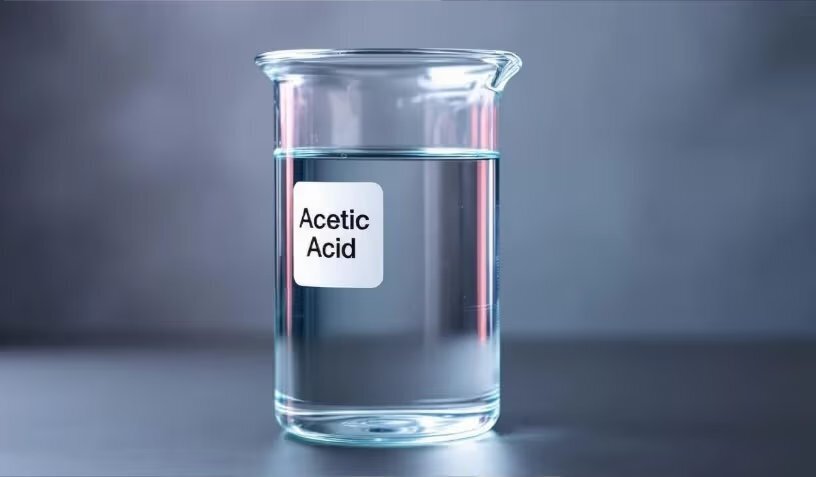
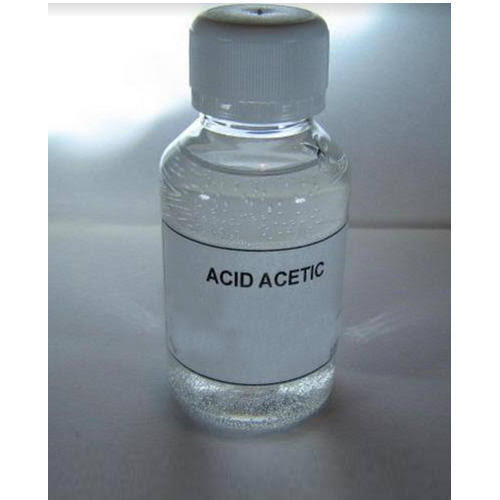
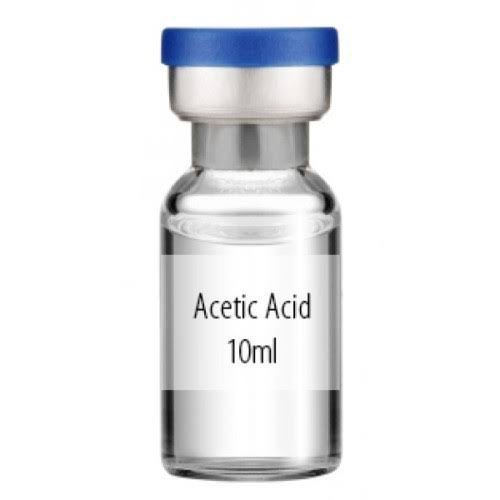
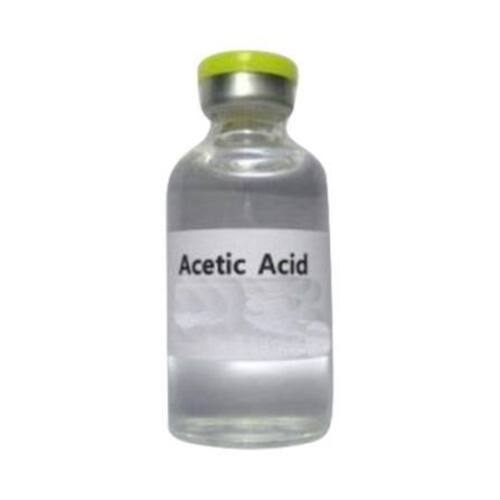
Acetic Acid is a clear, colorless organic acid with a strong vinegar-like odor, widely recognized as an essential industrial chemical and versatile chemical intermediate. Manufactured by GNFC, it offers high purity, consistent quality, and reliable performance, making it suitable for a broad range of industrial applications. It is extensively used in the production of vinyl acetate monomer (VAM), acetic anhydride, acetate esters, purified terephthalic acid (PTA), dyes, pigments, and numerous specialty chemicals. In addition, Acetic Acid serves as an effective pH regulator, solvent, and reagent in various manufacturing processes. Its superior purity, clear appearance, and dependable quality make it an ideal choice for industries such as chemical manufacturing, pharmaceuticals, textiles and dyeing, paints and coatings, adhesives and sealants, water treatment, food processing (food-grade applications only), and laboratory and industrial reagent applications. Available in bulk quantities and export-standard packaging, GNFC Acetic Acid is trusted for delivering consistent performance across diverse industrial requirements.
Versatile Industrial ApplicationsWith its exceptional purity (99.8%) and high miscibility, Acetic Acid is a preferred choice in diverse industries. It serves as a chemical intermediate, solvent, reagent, and pH regulator, making it invaluable for processes in industrial manufacturing, food processing, and laboratory environments. Its adaptability supports manufacturers, exporters, and traders across India and beyond.
Key Chemical PropertiesAcetic Acid (Glacial) stands out with its molecular formula CH3COOH and distinctive sour taste. The liquid exhibits a boiling point of 118C, a melting point of 16.6C, and a refractive rate between 1.371 and 1.373 at 20C. With its density of 1.049 g/cm3 and complete miscibility with water, alcohol, and ether, it ensures optimal performance across a range of chemical processes.
Safe Storage and HandlingTo maintain product integrity and safety, store Acetic Acid in a cool, dry, well-ventilated area, away from heat and oxidizing agents. Ensuring that containers remain tightly closed is critical to preserving its purity and preventing hazardous interactions. Always adhere to proper safety protocols during storage and use.
FAQ's of Acetic Acid:
Q: How is Acetic Acid typically used in industrial and food applications?
A: Acetic Acid is widely utilized as a chemical intermediate, solvent, reagent, and pH regulator in numerous industrial processes, such as plastics and synthetic fiber manufacturing, as well as in the food industry for flavoring and preservation.
Q: What is the benefit of using Glacial Acetic Acid (99.8%) in manufacturing?
A: Glacial Acetic Acid (99.8% purity) ensures precise chemical reactions, minimizes impurities, and delivers high yield in production processes. Its high concentration makes it effective for industrial-scale synthesis and formulations.
Q: When should Acetic Acid be used as a pH regulator?
A: Acetic Acid is ideal for pH regulation during processes where control over acidity levels is crucial, such as in textile dyeing, food processing, and chemical syntheses, where maintaining specific pH values improves product quality and stability.
Q: Where should Acetic Acid be stored to maintain its quality?
A: It should be stored in a cool, dry, and well-ventilated area, away from sources of heat and oxidizing agents. Keeping containers tightly closed is essential to prevent evaporation and contamination.
Q: What is the process for diluting Acetic Acid safely?
A: Always add Acetic Acid slowly to water while stirring, never the reverse, to avoid splattering due to exothermic reactions. Proper protective equipment, such as gloves and goggles, should be used during this process.
Q: How does the solubility of Acetic Acid benefit industrial applications?
A: Since Acetic Acid is completely miscible with water, alcohol, and ether, it easily integrates into various solutions and formulations, enhancing its effectiveness and versatility across chemical, food, and pharmaceutical industries.
Technical Details 
 Vadodara - 390020, Gujarat, India
 Call Us:- +918488800346





 Send Inquiry

 Send Inquiry
 Send Inquiry
 Send SMS